
6 Gentle Ways to Move Through Emotional Overwhelm Without Pushing It Away
There are moments when emotions arrive all at once, without warning. Nothing dramatic has happened, yet everything feels heavier than it should. Your chest tightens, your thoughts scatter, and even simple decisions feel harder to make.
In those moments, the instinct is often to fix, suppress, or distract. But emotional overwhelm usually isn’t asking to be solved. It’s asking to be met: slowly, without pressure, and without judgment.
Moving through overwhelm requires softness, not intensity or effort. Below are six gentle ways to stay with what you’re feeling without letting it take over.
1. Let the Feeling Exist Without a Name
When emotions feel big, the urge to label them can create more tension. You might search for the “right” word (stress, sadness, anxiety) hoping that naming it will make it manageable.
Sometimes it helps more to simply notice that something is present. You don’t need to define it. Letting the feeling exist without analysis creates space instead of resistance.
2. Reduce Stimulation Before You Reduce Emotion

When overwhelm rises, it’s often paired with too much input. Notifications, conversations, background noise, and visual clutter all compete for your attention at once.
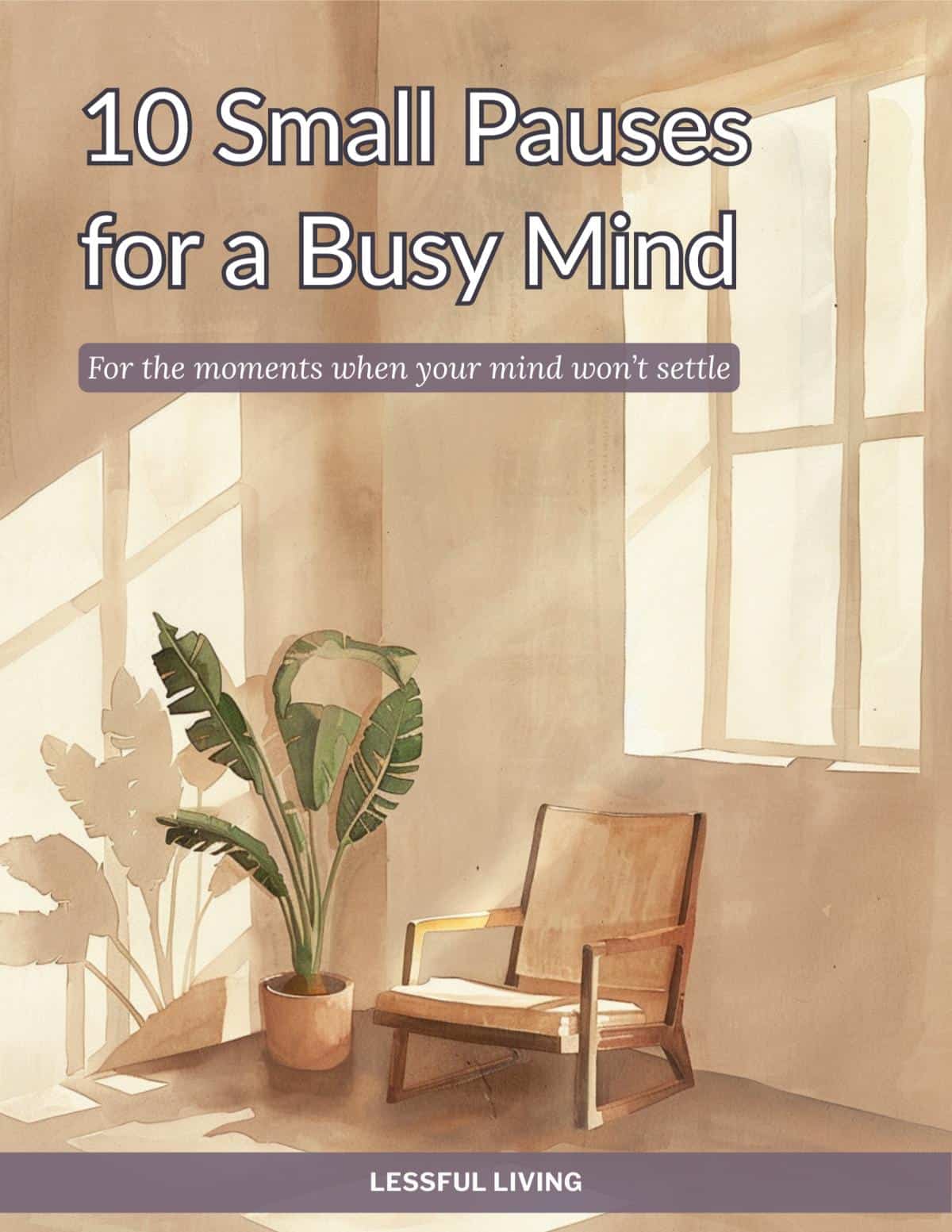
If this is hitting close to home, there’s a short free guide with 10 small pauses you can use when your mind feels busy or hard to settle.
Before trying to work through what you feel, lower the volume of what’s around you. Silence a device. Step into a quieter room. Dim a light. Emotional intensity often softens when stimulation does.
3. Anchor in Something Physical

Emotions can feel abstract and slippery, especially when your mind is racing. Your body, however, is concrete and steady.
Notice a physical sensation you can return to. The pressure of your feet on the floor. The weight of your hands resting in your lap. The feeling of a breath moving in and out.
Anchoring physically gives your nervous system a reference point when emotions feel uncontained.
4. Allow the Feeling to Change on Its Own Timeline
Overwhelm often intensifies when you expect it to leave quickly. You may think you should feel better by now, or that the emotion is lingering longer than it should.
Emotions don’t respond well to deadlines. When you stop watching the clock, they often move more freely.
Letting the feeling change at its own pace removes the pressure that keeps it stuck.
5. Choose One Gentle Action, Not a Solution

You don’t need a breakthrough when you’re overwhelmed. You need something small and kind.
That might mean stepping outside for a minute, sipping water, or sitting quietly without doing anything at all. The action isn’t meant to solve the emotion, but to support you while it passes.
6. Remind Yourself That This Is Human
Emotional overwhelm is a sign you’re human, not a sign that something is wrong with you. You’re simply responding to a full life.
Reminding yourself of this doesn’t minimize the feeling. It contextualizes it. You’re experiencing something that happens to everyone at times.
When Overwhelm Softens
Overwhelm rarely disappears in one clean moment. More often, it loosens gradually. The intensity fades. Your breathing steadies. Your thoughts slow down enough to be noticed.
This shift comes from allowing yourself to stay present without forcing change.
A Kinder Way Forward
Moving through emotional overwhelm doesn’t require strength or resilience in the traditional sense. It requires permission. Permission to feel, pause, and move gently instead of pushing through.
When you meet your emotions with patience rather than urgency, they tend to respond in kind. And even when they don’t, you’re still offering yourself something steady to stand on.
If this felt familiar, you don’t have to carry it alone.
I put together a short, free guide with 10 small pauses you can use when your mind feels busy, full, or hard to settle. They’re simple moments you can come back to during the day. No routines, no fixing, and no pressure.