9 Small Changes That Reduce the “Micro-Stressors” in Your Home
There’s a particular kind of tension that comes from being at home and still not feeling settled. You’re not rushing anywhere, nothing is technically wrong, and yet your body feels slightly on edge.
It’s the sense that something keeps pulling at your attention, even in spaces meant for rest.
Often, this feeling doesn’t come from one big problem, but dozens of small ones. The light that’s too bright. The drawer that sticks. The surface that’s always cluttered.
These tiny points of friction add up quietly, shaping how calm or scattered your home feels.
Micro-stressors are small, repeatable sources of tension that live in your environment. They don’t announce themselves, but they constantly ask for mental energy.
Reducing them isn’t about redesigning your home. It’s about noticing where your attention keeps getting interrupted.
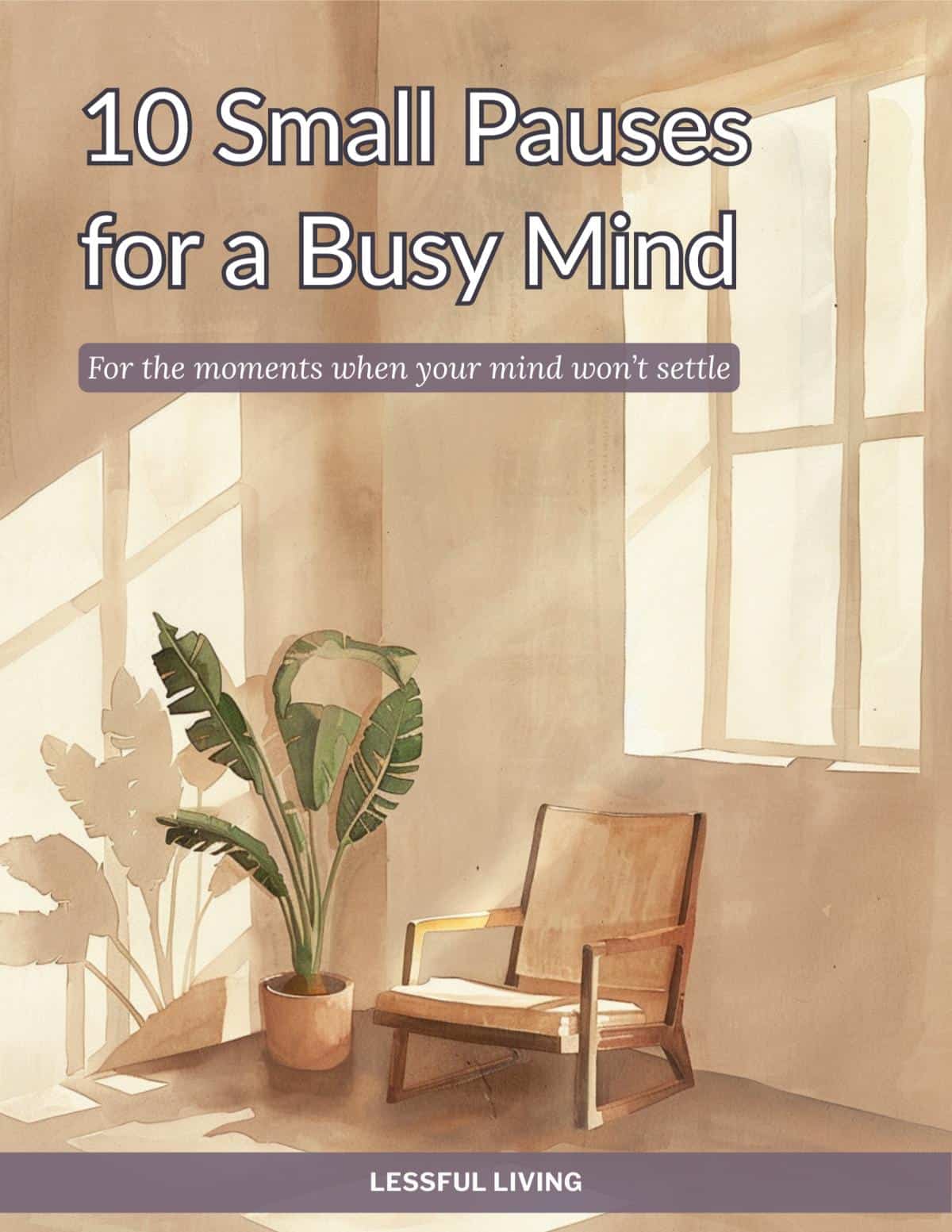
If this is hitting close to home, there’s a short free guide with 10 small pauses you can use when your mind feels busy or hard to settle.
What Makes a Space Feel Mentally Noisy
A home can look fine and still feel draining. That’s because mental noise isn’t always visual clutter. It’s anything that repeatedly asks for adjustment, decision-making, or tolerance.
Micro-stressors often show up as small annoyances you’ve learned to live with. Over time, “living with it” becomes a steady background load your nervous system carries.
1. Address One Repetitive Annoyance
Start with something you interact with daily that never works quite right, like a cabinet that won’t close, a lamp you have to adjust every time, or a charger that only works at a certain angle.
Fixing one recurring friction point removes a stressor your body has been compensating for repeatedly.
2. Soften Harsh Sensory Inputs
Pay attention to light, sound, and texture. Overhead lighting that feels too sharp, background noise that never fully stops, or surfaces that feel cold or uncomfortable can subtly keep your body alert.
Small shifts like warmer bulbs or quieter rooms can lower baseline tension.
3. Reduce Visual Interruptions in Rest Areas
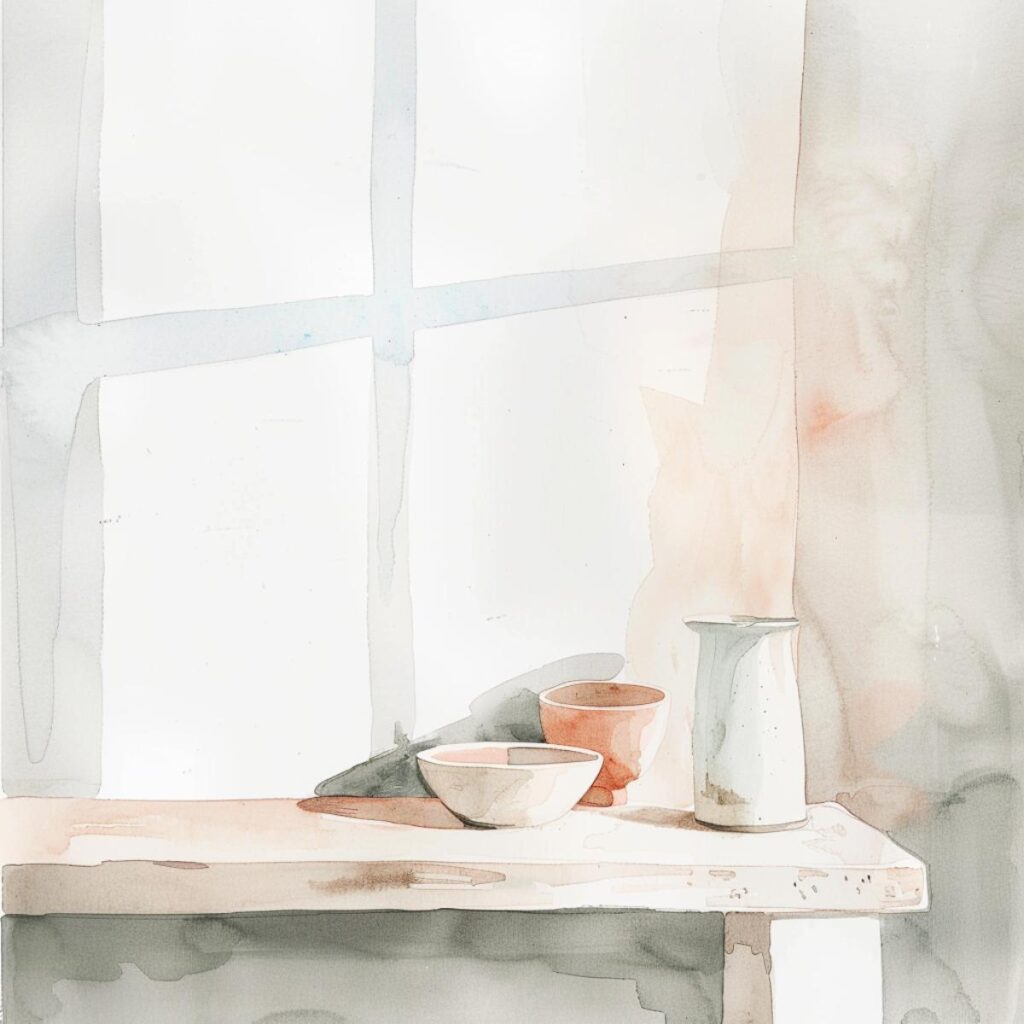
Not every room needs to be minimal, but areas meant for rest benefit from fewer visual demands. Objects that signal tasks, decisions, or unfinished business pull the mind outward.
Clearing just one surface in a calm space can make rest feel more accessible.
4. Create a Landing Place for Daily Items
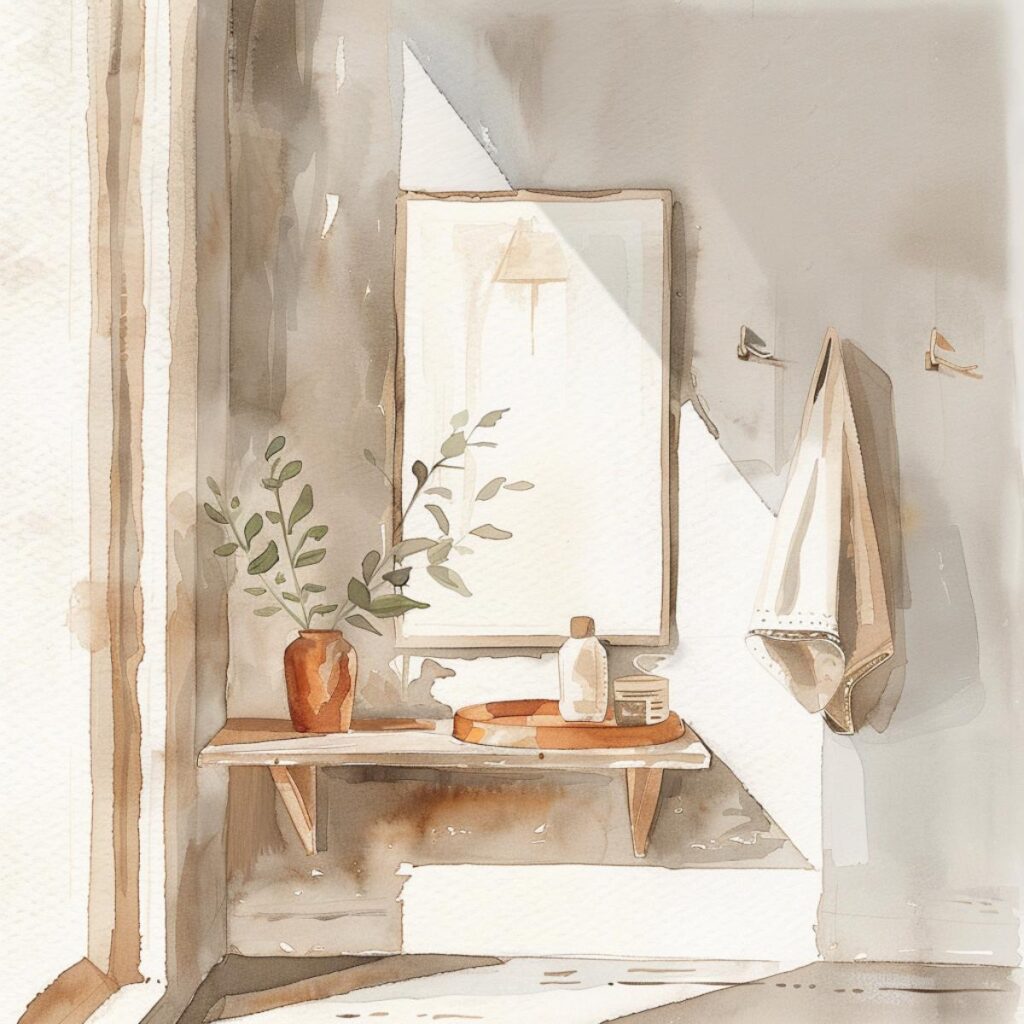
When items don’t have a clear place, your mind keeps track of them. Keys, mail, bags, or chargers that float around create low-grade vigilance.
A simple, consistent landing spot allows your attention to relax once things are set down.
5. Remove What Requires Extra Explanation
Some objects create mental effort because they don’t fit anymore. Things like gifts you don’t use or decor that no longer feels like you. Items that carry obligation instead of usefulness.
Letting go of these reduces internal negotiation each time you see them.
6. Simplify Your Most Used Pathways
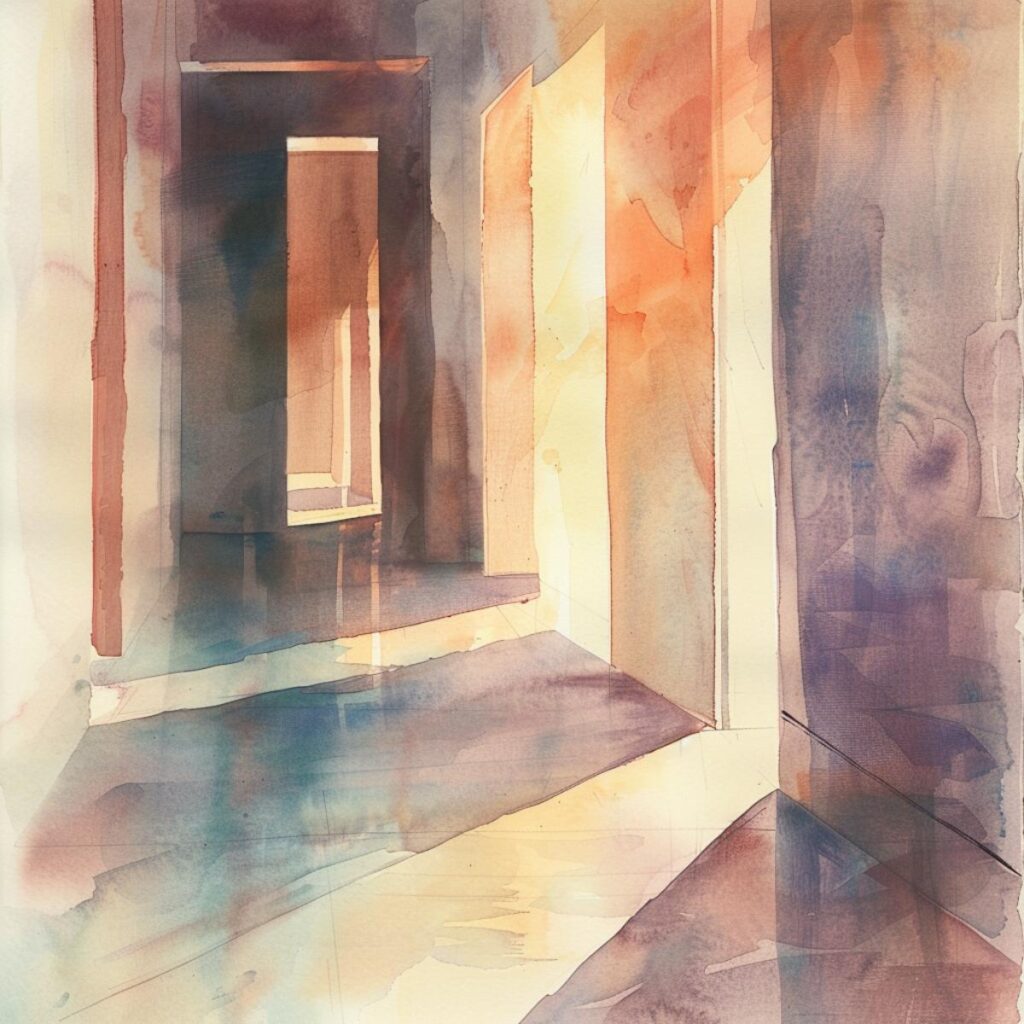
Notice where you move most often. Doorways, counters, and walkways that require sidestepping or rearranging create constant micro-adjustments.
Clearing these paths allows movement to feel smoother and less effortful.
7. Limit Decision Points in Daily Routines
Too many choices can create quiet fatigue. Clothing piles, crowded shelves, or multiple options for simple tasks require repeated decisions.
Reducing options in high-frequency routines frees mental energy without sacrificing comfort.
8. Adjust the Pace of Information Coming In
Screens, alerts, and background media add to environmental stress, even when they’re not the focus. Constant input keeps the mind scanning.
Reducing how much information enters shared spaces helps the nervous system settle more easily.
9. Trust Small Improvements Over Big Overhauls
You don’t need to fix everything. Each small adjustment removes one thread from the mental tangle.
Over time, fewer micro-stressors create a home that feels quieter, even if nothing dramatic has changed.
A Home That Asks Less of You
Calm doesn’t come from perfection. It comes from spaces that don’t demand constant correction. When your environment stops interrupting you, your mind has room to soften.
Reducing micro-stressors is a way of letting your home support you instead of subtly pulling at your attention. Little by little, that support adds up to a steadier, calmer way of living.
If this felt familiar, you don’t have to carry it alone.
I put together a short, free guide with 10 small pauses you can use when your mind feels busy, full, or hard to settle. They’re simple moments you can come back to during the day. No routines, no fixing, and no pressure.