
7 Quiet Ways Anxiety Shows Up as Mental Noise (And Why It’s So Hard to Rest)
Some days, nothing is wrong, and yet everything feels loud. The house is still, the to-do list is reasonable, and your phone is face down, but your mind keeps humming, scanning, circling.
It’s not panic. It’s not stress. It’s just… noise.
That quiet, persistent mental chatter is one of the most overlooked ways anxiety shows up. Not as fear, but as fullness. Not as crisis, but as constant background activity.
When Calm Outside Doesn’t Mean Calm Inside

Anxiety doesn’t always arrive with racing thoughts or visible worry. Often, it arrives as a subtle pressure to stay alert. A feeling of needing to be ready. A low-grade sense that something might need your attention, even when nothing actually does.
It can look like replaying conversations that already ended. It can feel like mentally rehearsing tasks that are already handled. It can sound like a quiet internal checklist that never quite clears.
This kind of mental noise is easy to miss because it hides inside functioning. Life continues, and you keep up, but the mind never fully settles.
If this is hitting close to home, there’s a short free guide with 10 small pauses you can use when your mind feels busy or hard to settle.
The Many Small Ways Anxiety Creates Mental Static

This isn’t about dramatic overwhelm. It’s about the accumulation of tiny, unfinished mental movements that never resolve.
1. The Constant Background Scan
Even in rest, the mind keeps checking. Is there something I forgot? Is someone waiting on me? Should I be doing something else?
Nothing is wrong, but the internal radar stays on. That constant scanning creates a sense of internal busyness, even in stillness.
2. Open Loops That Don’t Feel Like Tasks
Some mental noise isn’t tied to clear to-dos. It’s questions without deadlines, decisions without urgency, thoughts that don’t demand action but also don’t leave.
They hover and linger. They take up space. And because they aren’t actionable, they’re hard to close.
3. Mental Rehearsing Without Intention
Anxiety often shows up as preparation. Running conversations before they happen. Replaying moments after they pass.
Practicing responses no one asked for. It feels productive and responsible, but it quietly fills the mind.
4. The Pressure to Stay Available
There’s a subtle tension in being reachable. Even when notifications are off, the mind knows they exist. The possibility of interruption stays present.
It’s not distraction. It’s anticipation. And anticipation is rarely restful.
5. Difficulty Letting Moments End
An anxious mind doesn’t like loose ends, so it keeps pieces of the day open. A comment. A thought. A feeling.
Instead of allowing moments to close, it carries them forward, which creates the feeling of being mentally full even when the day is light.
6. Over-Awareness of Small Responsibilities
It’s not the big things that create noise. It’s the tiny ones, like the email you might need to send or the thing you should remember.
Each one is small. Together, they create a steady hum.
7. The Inability to Fully Arrive
Even in calm moments, part of the mind stays slightly elsewhere. Tracking. Noticing. Holding. It’s hard to land when the mind is always halfway ahead.
Why This Kind of Anxiety Is So Tiring
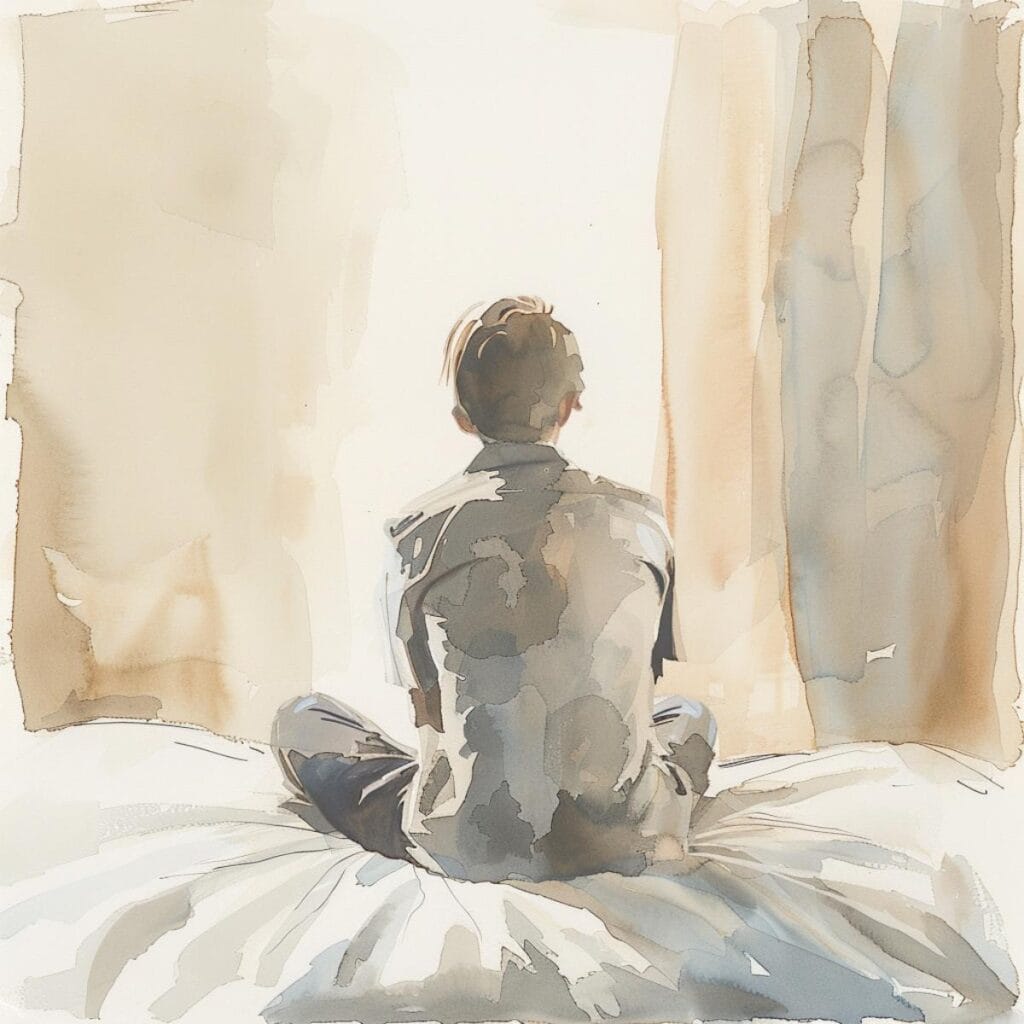
Mental noise is exhausting because it doesn’t feel like work. There’s no clear start or finish, no visible output, just continuous internal activity.
It’s like leaving too many tabs open. Not enough to crash, but enough to slow everything down.
The body might be resting, and the schedule might be light, but the mind is still processing. And without clear stopping points, it never truly resets.
The Lessful Perspective: Quiet Isn’t the Absence of Sound
In a Lessful Living sense, calm isn’t created by adding more tools, routines, or systems. Instead, it’s created by removing the subtle pressures that keep the mind engaged.
That means noticing when you’re holding thoughts “just in case,” when you’re mentally preparing without being asked, and when you’re staying alert without a reason.
It’s about softening the habits that feed anxiety, not fixing it.
Small Shifts That Create Real Quiet
Not dramatic changes. Just gentle releases. Letting a thought pass without resolving it. Allowing a moment to end without reviewing it. Closing a mental tab even if nothing is wrong.
Clarity comes from permission, not control. Permission to not monitor. Permission to not prepare. Permission to not hold.
A Different Kind of Rest
Rest isn’t only physical. It’s cognitive. It’s the feeling of not needing to be ready, not needing to track, not needing to carry.
When anxiety shows up as mental noise, the answer isn’t more effort. It’s less. Less holding. Less scanning. Less internal commentary.
Not everything needs your attention, and not every thought needs an answer. Not every moment needs to be managed. Sometimes, the most grounding shift is simply allowing the mind to be quiet, even if nothing is resolved.
If this felt familiar, you don’t have to carry it alone.
I put together a short, free guide with 10 small pauses you can use when your mind feels busy, full, or hard to settle. They’re simple moments you can come back to during the day. No routines, no fixing, and no pressure.