

7 Quick Ways to Calm Your Mind When You Don’t Have Time to Slow Down
There are days when your mind is moving faster than your body can keep up. You’re juggling tasks, switching between roles, thinking three steps ahead, and still feeling behind.
Even when you desperately want a moment of quiet, life keeps pulling you forward. You don’t have time to step away, but you still need your mind to settle.
Calm doesn’t always require slowing down your entire day. Sometimes it’s a shift in how you move through it, a soft reset that helps your mind breathe even when your schedule can’t.
Here are a few gentle ways to find clarity and steadiness when you’re short on time but still craving calm.
1. Name What’s Pulling Your Attention

When your mind feels scattered, it’s usually because multiple threads are tugging at once. You may not even realize how many.
Taking a brief moment to mentally name what’s weighing on you can ease the tension. It’s a small act of acknowledgment that brings your attention out of the fog and back into something grounded.
If this is hitting close to home, there’s a short free guide with 10 small pauses you can use when your mind feels busy or hard to settle.
Why it helps
Naming your distractions reduces the mental swirl. It gives shape to what felt chaotic.
2. Lower the Volume of One Thing
When everything feels loud, you don’t need to quiet all of it. Just one layer. Maybe it’s a notification sound, a tab you can close, or a task you can temporarily release.
Even one small reduction in noise can shift your internal pace.
Why it helps
Your mind relaxes when at least one channel stops demanding attention.
3. Move Your Body for 20 Seconds
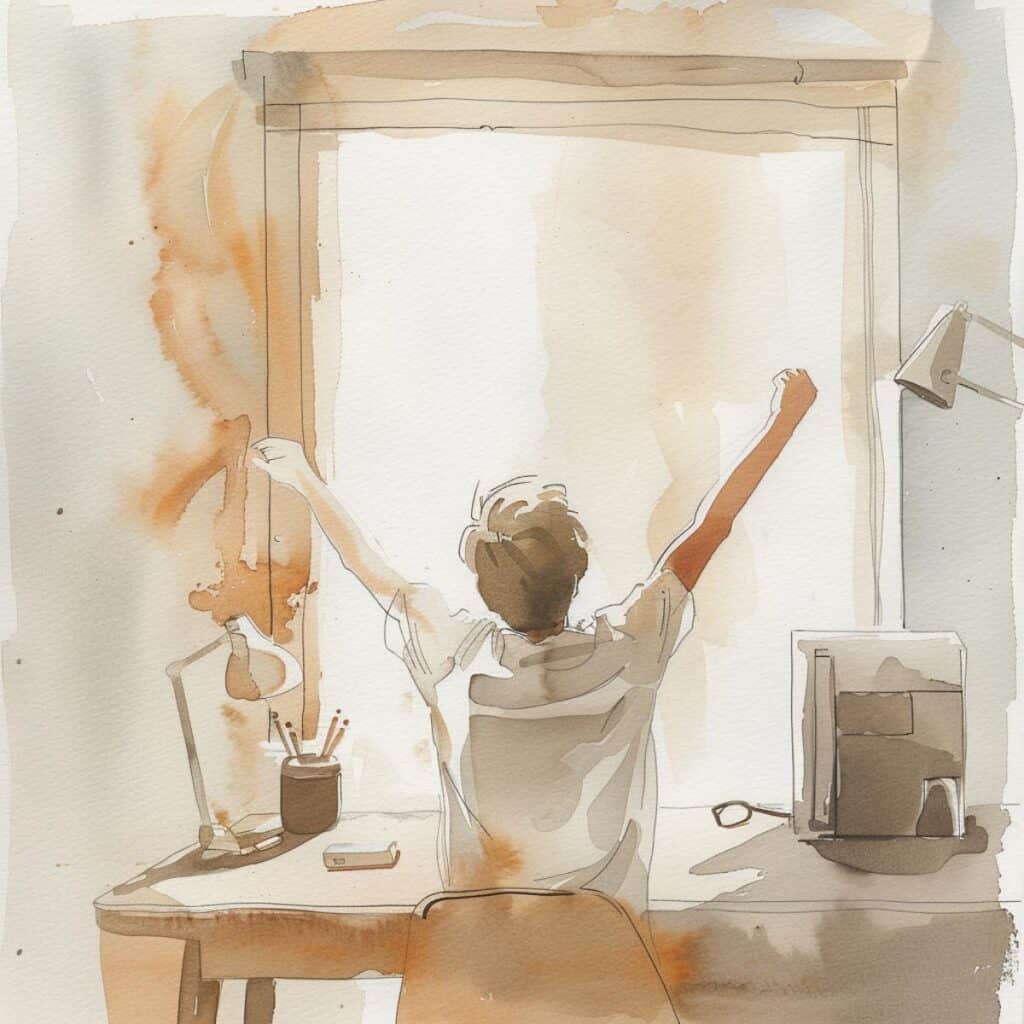
A small burst of movement, like stretching your arms overhead, walking to another room, or rolling your shoulders, helps release mental static.
You don’t need a break. You just need a reset.
Why it helps
Physical movement grounds you in the present moment, which naturally quiets mental overwhelm.
4. Anchor Yourself With One Sensation
When your mind is racing, your body can be an anchor. Notice the temperature of your hands, the feeling of your feet on the floor, or the texture of something you’re holding.
For a few seconds, let your attention land on that one thing.
Why it helps
Your nervous system steadies when it has something simple and sensory to focus on.
5. Do One Task All the Way Through

When your schedule is packed, it’s tempting to multitask just to stay afloat. But switching between unfinished tasks is what drains you fastest.
Choose one small task and take it across the finish line.
Why it helps
Completion brings a sense of calm your mind recognizes immediately.
6. Let One Expectation Go
Often, the pressure you feel isn’t from the task itself, but from the expectation you’ve attached to it. When you’re overwhelmed, releasing even one expectation can lift a surprising amount of weight.
Pick something that doesn’t need to be perfect today.
Why it helps
Reducing internal pressure creates more mental space than you expect.
7. Give Yourself a Single Calm Thought

When the day is busy, complicated practices can feel out of reach. But one clear thought can help you reorient. Something like:
- “Right now, I’m doing what I can.”
- “I don’t need to solve everything in this moment.”
A grounding thought brings your mind back to steady ground.
Why it helps
A calm thought interrupts the rush and reminds you that clarity is still available, even in movement.
Closing Thoughts
Some days won’t slow down, no matter how much you wish they would. But calm isn’t only found in quiet spaces. It’s also found in the small choices you make while life is still moving.
When you give your mind even a brief moment of steadiness, the day feels a little less heavy, and you feel a little more capable of meeting it.
If this felt familiar, you don’t have to carry it alone.
I put together a short, free guide with 10 small pauses you can use when your mind feels busy, full, or hard to settle. They’re simple moments you can come back to during the day. No routines, no fixing, and no pressure.